
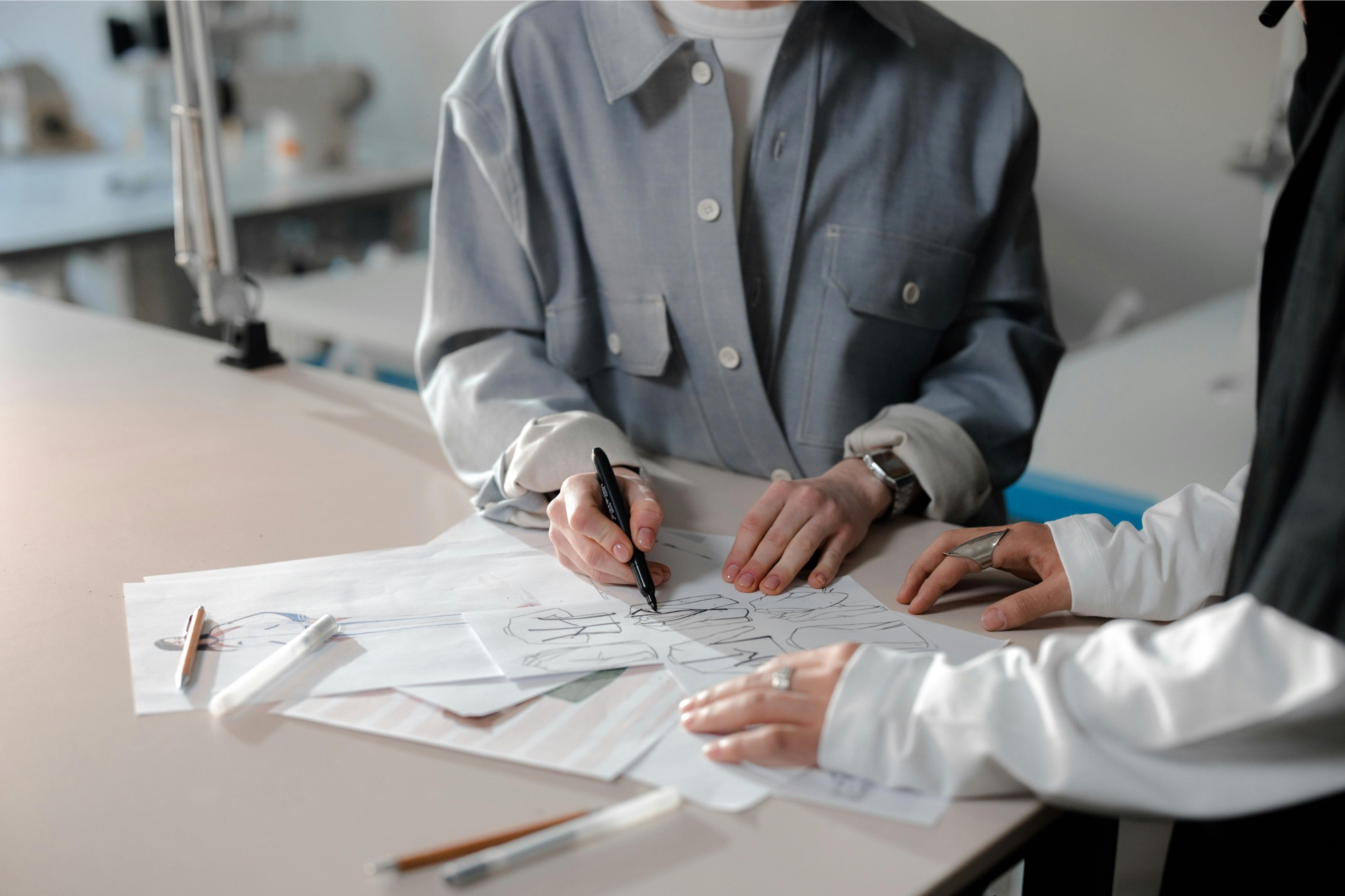
Style office
The Style Department (also known as Office Style) is in charge of designing the Collections from a creative point of view and is led by a Creative Director (an expression first used by Karl Lagerfeld), who is responsible for the brand's all-round Image.
“The Style Office is the creative heart of the company.”
The Creative Director: more than a visionary
In addition to coordinating the team of designers working alongside him, the Creative Director works in synergy with the other Departments (Product, Production, Communications, and Commercial) to ensure that its creative vision integrates seamlessly with the company's goals and brand positioning.
Being a Creative Director today means combining artistic talent, managerial skills and a deep understanding of industry developments. Figures such as Demna Gvasalia o Alexander Michael embody this unique hybridization of creative and strategic skills.
The Designers: the team that shapes visions
Alongside the Creative Director operates a team of specialized Designers, each of whom contributes specific skills to the creation of the Collections:
Main figures
- Clothing Designer: they are in charge of garment design, working on silhouettes, volumes and details.
- Accessories Designer: create small leather bags and accessories, often central to the brand's commercial success.
- Footwear Designer: combine functionality and aesthetics to make shoes that complement the Collection.
- Knitwear Designer: they design knitwear garments, experimenting with innovative yarns and textures.
- Print Designer: create prints and patterns that enrich the fabrics, adding a distinctive touch to the collection.
- Textile Designer: they design unique fabrics, combining innovative materials and advanced techniques.
The creative process: what it consists of
Each stage of the creative process is a mix of operational and strategic activities that require precision, organization and collaboration.
Here's what, concretely, the Style Department is about
Step 1: Research
Trend analysis: The process begins with careful observation of changes in the global fashion landscape. Reports that offer an early view of emerging trends are studied, collections presented by competitors during the latest Fashion Weeks are analyzed, and industry trade shows are attended (such as Première Vision o Pitti Uomo) to explore innovative materials, processing techniques and new approaches to design.
In addition to this, constant Cool Hunting allows us to observe cultural movements and influences emerging from the world of film, art, music and technology, anticipating consumer desires.
Competitor analysis: an in-depth analysis of the competitive landscape is carried out to understand what works in the market (study of collections, bestsellers, and strategies of key competitors) and to identify possible opportunities for innovation (assessment of unexplored spaces to propose creative and distinctive solutions that can strengthen brand identity).
Materials and Components Research: The choice of materials and components is a crucial moment in defining the personality of the Collection. The team searches for fabrics, leathers, yarns and components that are innovative, functional and in line with the creative concept.
Phase 2: Concept
Creating Moodboards: moodboards are the starting point for defining the concept of the collection. The creative team selects images, fabrics, colors and graphic details, combining them into visual compositions that capture the essence and atmosphere of the Collection. These tools are a key guide throughout the creative process, providing a clear and shared visual narrative that guides stylistic and strategic choices. Each moodboard is designed to express the central theme of the Collection, delineating not only the aesthetic, but also the message and positioning of the brand.
Interior Creative Briefs: The Creative Director is the protagonist of this phase, thanks to his ability to transform a vision into an operational strategy. Through the creative brief, the Director explains to the team the aesthetic and strategic objectives of the collection, explaining the concept and priorities. This moment serves to share with the team not only the creative direction, but also the challenges and opportunities of the project. The Designers, in turn, interpret the brief with concrete proposals, developing solutions that reflect the brand identity and market demands.
Collaboration with the Merchandising Team: collaboration with the Merchandising Team is essential to ensure that the creative concept is also commercially effective. Together, the two teams define the guidelines for the Collection's target audience, brand positioning, and expected sales volumes. This step is crucial to balancing creativity with market needs, ensuring that the Collection includes iconic garments, products with high commercial appeal, and strategic pieces for specific audience segments. This constant dialogue between creativity and business strategy ensures that the Collection is not only innovative, but also relevant and performs well in the global marketplace.
Step 3: Design
Sketching: This phase begins with the development of sketches, made by Designers by hand or with the help of graphic software. These sketches represent the first visual interpretation of ideas and include key technical details such as seams, buttons, zippers, and other functional components. Sketches must be precise and detailed to provide the development and production team with clear guidance that is faithful to the initial concept.
Digital rendering: Once preliminary sketches are completed, designers use software such as Illustrator or Photoshop to create more advanced renderings. At this stage, they work on proportions, textures and colors to achieve a more realistic view of the final product. Digital rendering allows for experimentation with different aesthetic variations, enabling quick changes without the need for immediate physical prototypes.
The bill of materials: the calculation of costs
Once the development of the Collection is finalized, the Purchasing Manager compiles the Bill of Materials, a technical document that collects all the information about the materials, processing and production costs of each garment. This step is essential to ensure that the Collection is not only creatively successful, but also economically sustainable.